





Knowledge · fire safety
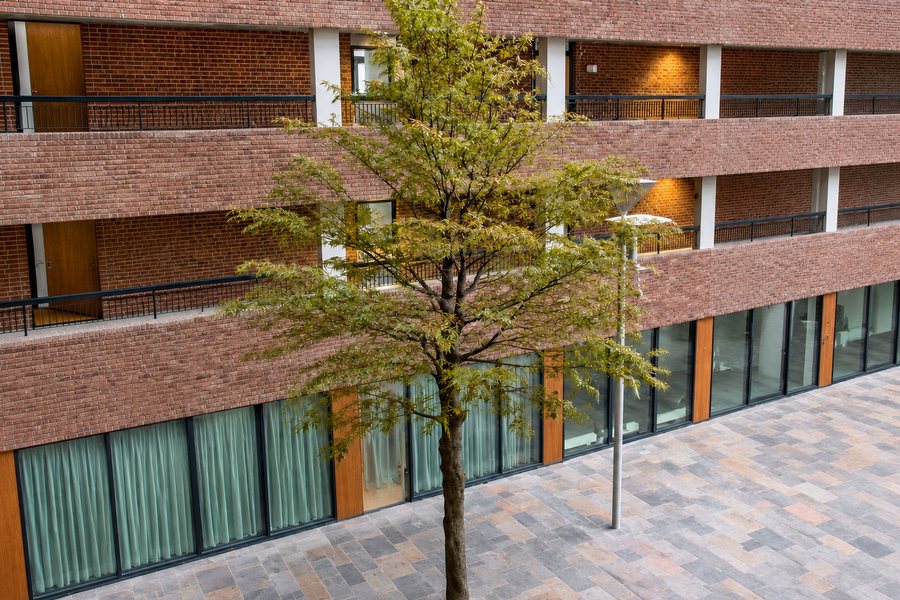
Artificial plants in escape routes
In the shared corridors, halls and stairwells of Dutch residential buildings that form an escape route, only non-combustible decoration is allowed: metal, stone, glass or class A1. Artificial plants do not belong there, not even fire-retardant ones. In offices, hotels, care and hospitality, fire-retardant greenery is often possible, as long as it meets the fire class required at that spot.
Residential corridor: no. Elsewhere: often yes.
Artificial plants are made of plastic. Even when fire-retardant, they do not reach class A1. That is why they are not allowed in the shared escape route of a Dutch residential building. In other buildings the rules look at the location: which fire class applies to walls and ceilings there? Check this with your fire safety adviser or the fire service. We supply the certificate that belongs to your products.
By Rinze de Leeuw and Lennard Duijvestijn · last checked 1 November 2026
Residential: corridor, hall and stairwellOnly metal, stone, glass, non-combustible (NEN 6064) or A1. No artificial plants (Dutch Bbl article 6.15a).
Office, hotel, care and hospitalityHanging greenery must meet the fire class required for walls and ceilings there (Bbl article 6.14). Our fire-retardant range: Euroclass B-s2,d0.
Everywhere: no flaming dropletsDecoration above a floor used by people must not drip when burning (Bbl article 6.24).
What applies where?
The rules depend on the building, the location and the country. Choose your situation.
Residential building (NL)
In a shared circulation space of a residential building that an escape route runs through, no fire-hazardous objects are allowed under the Dutch Building Decree (Bbl, article 6.15a). Decoration is named explicitly, along with furniture, bicycles and waste. Decoration is only allowed if it is:
- made of metal, stone-like material or glass;
- non-combustible according to NEN 6064; or
- class A1 according to EN 13501-1.
Artificial plants do not meet this, fire-retardant ones included. Signage, information for residents and, at a front door, a picture or doormat of at most 0.5 m² remain allowed. Article 6.23a also requires a clear width of at least 0.85 m at all times.
Office, hotel, care and school
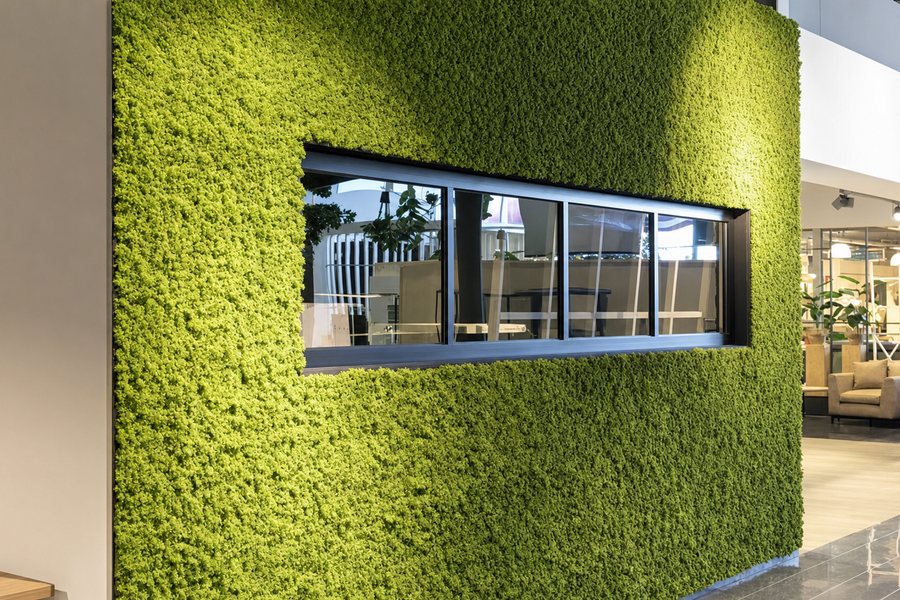
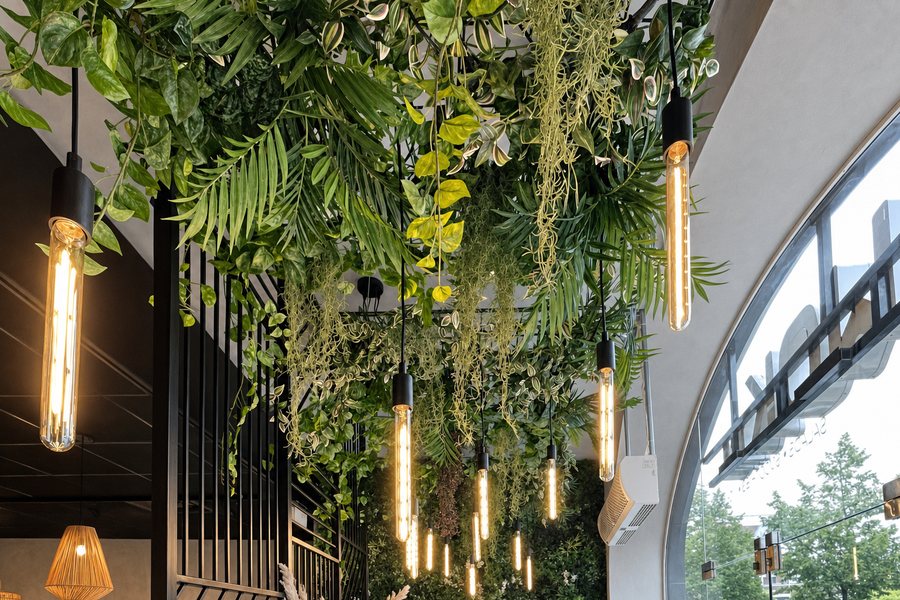
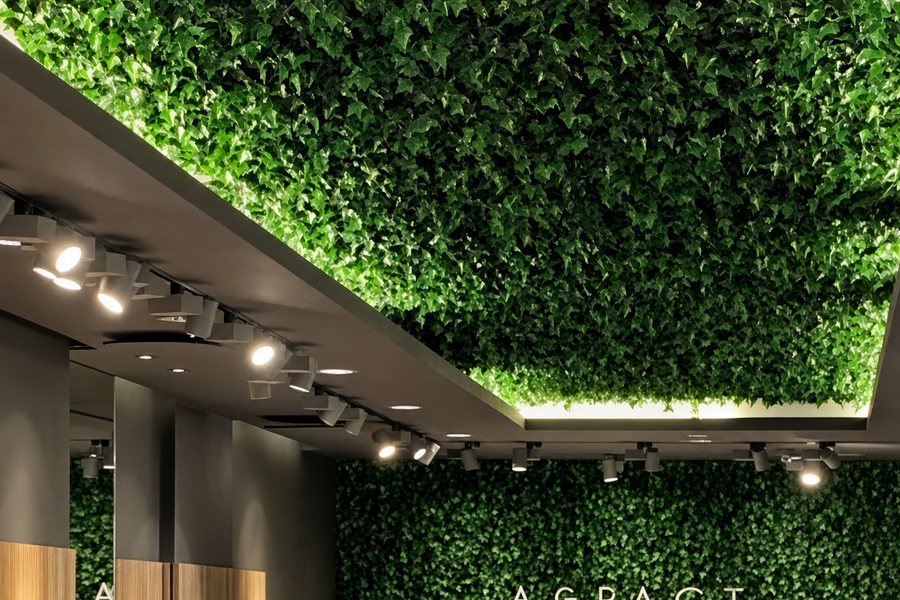
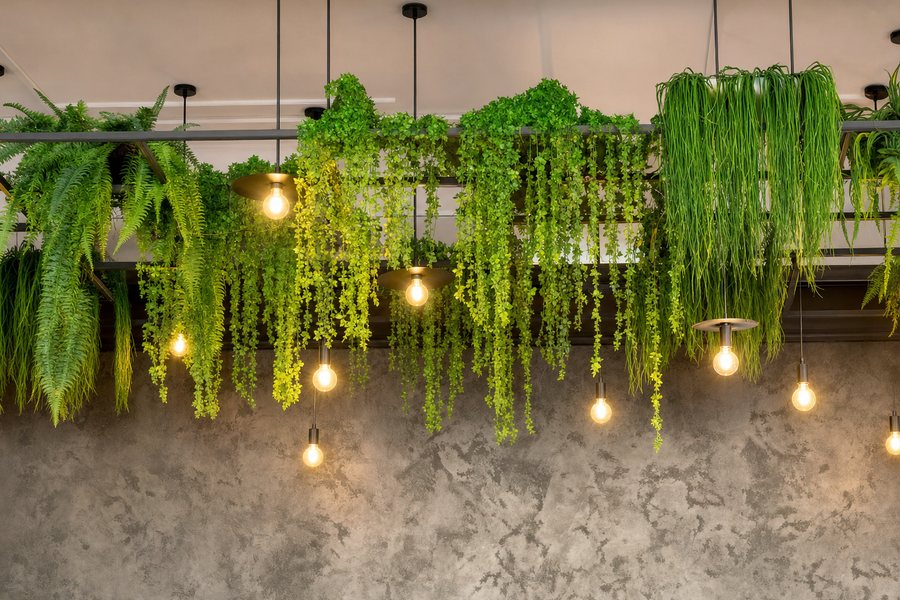
For other buildings, the Dutch Bbl has no separate ban on decoration in escape routes. Article 6.14 applies: decoration must not create a fire hazard. For greenery that does not stand on the floor, such as a plant wall, hanging plants or a green ceiling, that means: it makes only a minor contribution to the fire hazard, is non-combustible, reaches A1, or meets the requirements for walls and ceilings at that spot.
A short afterflame and afterglow time (at most 15 and 60 seconds) only counts for decoration on the floor, such as a plant in a pot. The class that applies at your spot is stated in the permit or the fire safety plan of the building. Bbl article 3.35 treats the old Dutch class 2 (NEN 6065) as Euroclass B in an enclosed space.
Hospitality and trade fairs
In hospitality venues and halls in the Netherlands, articles 6.14 and 6.24 apply as well. Keep greenery away from heat sources: where more than 2 kW/m² of radiant heat or more than 90 °C can occur, decoration must be A1 or non-combustible (article 6.14, paragraph 4).
Exhibition halls have their own rules. RAI Amsterdam allows artificial plants that reach class 2 according to NEN 6065, otherwise only to a very limited extent. Messe Frankfurt requires artificial plants that are flame-retardant (DIN 4102 B1 or the European equivalent), do not drip while burning, and a copy of the proof on the stand.
Germany and the United Kingdom
In German places of assembly (Versammlungsstätten), decoration must be at least flame-retardant, and non-combustible in necessary corridors and stairwells (Versammlungsstättenverordnung § 33, for example Baden-Württemberg). So no artificial plants there either. For Germany we have the certificate according to DIN 4102-1 (B1).
In the United Kingdom, Kent Fire and Rescue Service, for example, advises keeping artificial foliage away from stairways, corridors and means of escape, using foliage sold as fire retardant, and keeping the certificates for inspection. For the UK we also have a certificate according to BS EN 1021-1 and -2.
How do you find out what applies?
As the owner or user you are responsible for fire-safe use. The requirement for your spot is in the permit, the fire safety plan or the fire risk assessment of the building. If you are unsure, ask the building manager, your fire safety adviser or the fire service.
We help translate that into greenery: which products fit the requirement and which certificate belongs to them. We send the certificate with the quote or the delivery, so you can add it to your fire safety file.
Fire-safe greenery, where it is allowed.


Greenery in a hall or stairwell, without doubts about the rules?
Send a photo and tell us what kind of building it is. We will tell you honestly what is possible at that spot, and make a design with images of your space and a fixed price.
- 1Tell us about your buildingResidential, office, hotel or care, and which spot.
- 2Send a photo if you have oneYour phone is fine.
- 3Advice, design and fixed priceYou hear from us the same working day.
Rather talk first? Email [email protected] or call +31 85 13 09 155

"The owner of the new hotel wanted lots of greenery and little maintenance. And all of it sustainable and fire-safe. That quickly led us to Coolplant."
 Pieter van Kruijsdijk · Architect, Fletcher HotelView project
Are artificial plants allowed in escape routes?+
It depends on the building. Not in the shared corridors, halls and stairwells of a Dutch residential building that an escape route runs through: only decoration of metal, stone, glass, non-combustible material or class A1 is allowed there (Bbl article 6.15a). In offices, hotels, care and hospitality, fire-retardant greenery is often possible, as long as it meets the fire class required at that spot.
Can fire-retardant artificial plants go in the corridor of an apartment building?+
No, not if an escape route runs through that corridor. Fire-retardant (such as Euroclass B) is not the same as non-combustible (A1). The Dutch Bbl requires non-combustible material there.
Can a plant wall go in the stairwell of an office?+
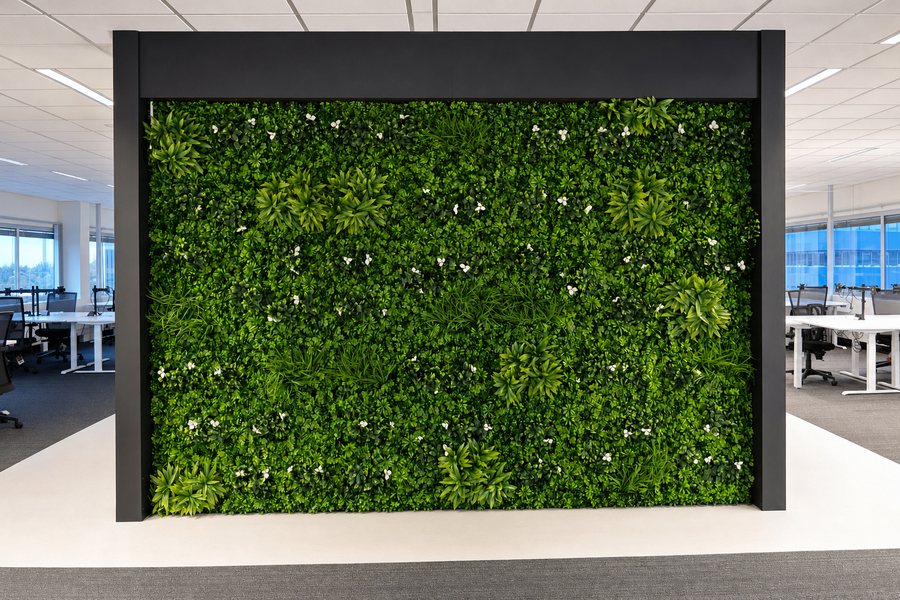
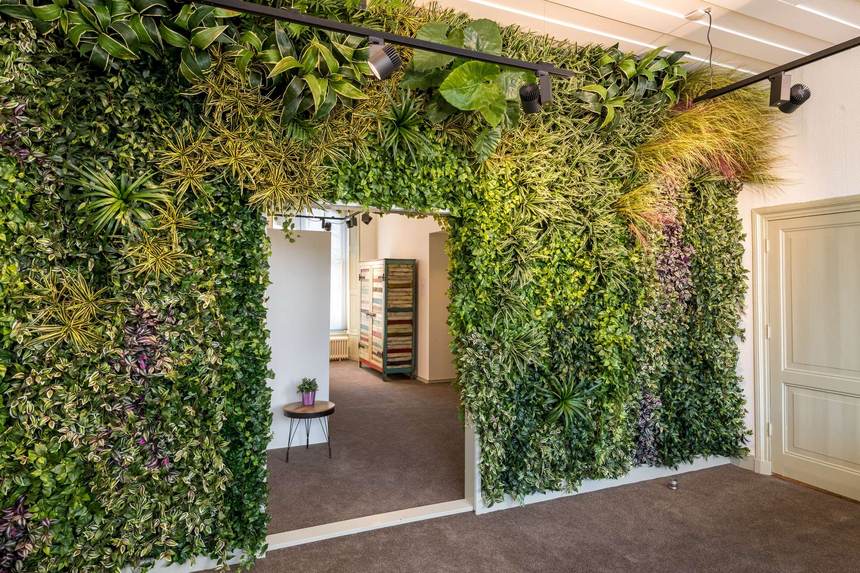
It can, if the wall meets the requirement for walls and ceilings at that spot (Bbl article 6.14). Our plant wall panels are tested to Euroclass B-s2,d0 according to EN 13501-1. Whether that is enough for your stairwell is stated in the fire safety plan; check it with your adviser.
What is the difference between fire-retardant and non-combustible?+
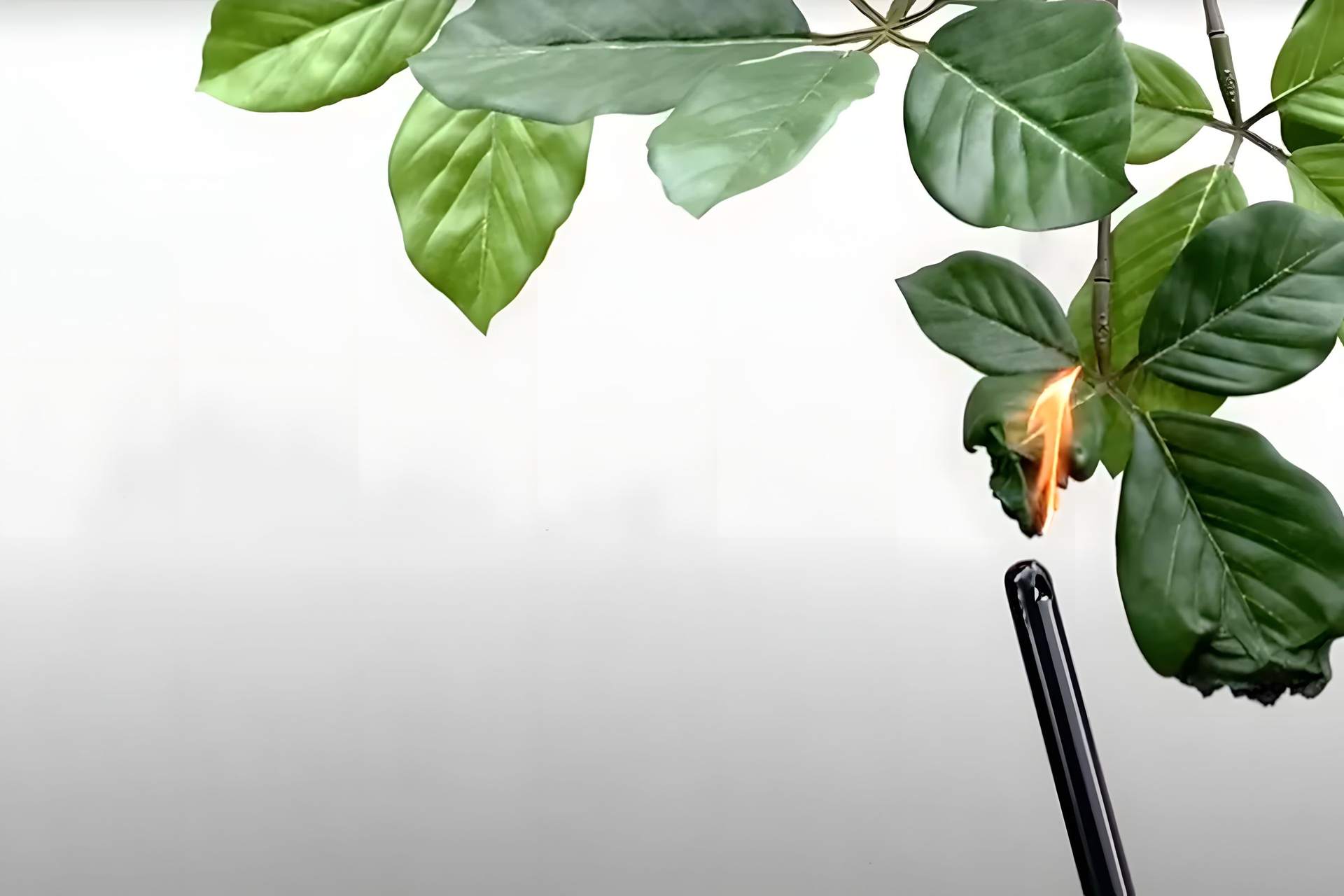
Non-combustible material (class A1, such as stone and glass) does not contribute to a fire. Fire-retardant material can burn, but contributes only to a limited extent. Our fire-retardant range is tested to Euroclass B-s2,d0: a very limited contribution to fire, medium smoke production and no flaming droplets.
How much space must stay clear in an escape route?+
In the shared escape route of a Dutch residential building, at least 0.85 m clear width (Bbl article 6.23a). In other buildings the width depends on the building and the number of people; it is stated in the fire safety plan or fire risk assessment. Never place plants on stairs or in front of doors, extinguishers and signs.
Do I get a certificate for my fire safety file?+
Yes. We send the certificate that belongs to your products on request with the quote or the delivery. We do not publish certificates online.
Who decides what is allowed in my building?+
The rules come from national building and fire regulations; the requirement for your spot is in the permit, fire safety plan or fire risk assessment. The owner or user is responsible. If in doubt, your fire safety adviser, the local authority or the fire service decides. We help with the greenery that fits.
Check it yourself.
This page is not legal advice. Rules can differ per building and country; always check with your fire safety adviser. For background, read our article Fire-safe greenery: increasingly a requirement.
- Besluit bouwwerken leefomgeving (Dutch Building Decree), articles 3.35, 6.14, 6.15a, 6.23a and 6.24 (in force from 1-1-2026).
- NEN-EN 13501-1:2018. Fire classification of construction products and building elements, part 1.
- DIN 4102-1. Fire behaviour of building materials and components, part 1: building materials.
- Versammlungsstättenverordnung Baden-Württemberg, § 33 (decorations).
- RAI Amsterdam, Fire Service Regulation, article 5.9.
- Messe Frankfurt, factsheet on combustible stand materials (2024).
- Kent Fire and Rescue Service, Use artificial or dried foliage.
Not sure what is allowed? We will take a look.
Send your question, floor plan or photo. You hear from us the same working day: what is possible at that spot, what it looks like and what it costs.


